
Global Mental Health Initiative
About the Initiative
The Global Mental Health Initiative (GMHI) at the Herbert Wertheim School of Public Health and Human Longevity Science at UC San Diego advances research, implementation, education and innovation to improve mental health across diverse populations and healthcare settings worldwide. Through interdisciplinary collaborations with academic institutions, healthcare systems, governments and community organizations, GMHI develops, evaluates and scales evidence-based approaches that strengthen mental health systems and expand access to quality care, particularly in low-resource, humanitarian settings.
GMHI work spans population mental health, digital mental health, implementation science, workforce development and community-engaged research to translate evidence into sustainable practice.
Goals include:
- Lead collaborative global mental health research with local and international partners.
- Develop and evaluate scalable digital mental health interventions and technologies that improve access to care.
- Advance implementation science to strengthen mental health systems and expand access to care.
- Train the next generation of global mental health researchers and healthcare professionals.
- Foster interdisciplinary partnerships to address mental health across diverse populations and settings.
Meet the Team
UC San Diego
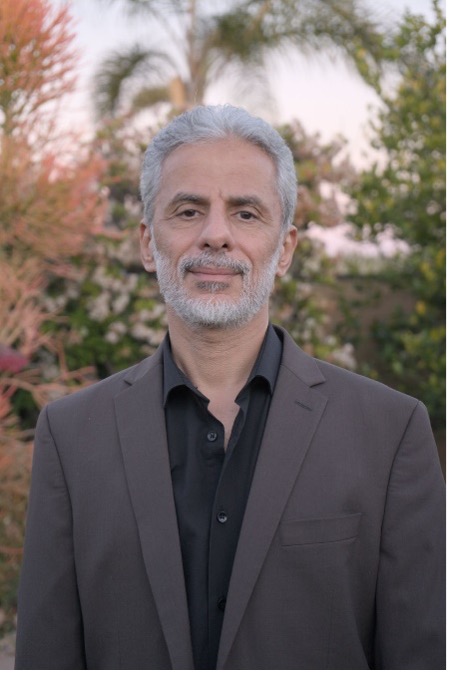 Wael Al-Delaimy, MD, PhD, professor
Dr. Al-Delaimy is an epidemiologist and professor at the UC San Diego Herbert Wertheim School of Public Health and director of the GMHI. He finished his medical degree and graduate diploma in community medicine in Iraw, received a doctor of philosophy in epidemiology in New Zealand and finished a research fellowship at the Harvard T.H. Chan School of Public Health. Dr. Al-Delaimy brings extensive expertise in epidemiology and public health research, with a particular focus on mental health biomarkers and research with refugee populations in San Diego and Jordan, and psychological impacts of climate change. He is also the director of the National Institutes of Health Fogarty International Center Training Program in International Research Ethics located in Jordan, which aims to build capacity in the Middle East in the responsible conduct of research.
 Benjamin Maxwell, MD
Dr. Ben Maxwell is a board-certified child and adolescent psychiatrist and globally recognized leader on strategies aimed at improving the mental health of kids. Dr. Maxwell received his medical degree from the University of Texas Health Science Center at Houston. He subsequently completed a General Psychiatry residency at the University of California, Irvine, followed by a fellowship in Child and Adolescent Psychiatry at the University of California, San Diego and Rady Children’s Hospital.
Dr. Maxwell directs the Division of Child and Adolescent Psychiatry at Rady Children’s Hospital. In this role, Dr. Maxwell has led the division to become a leader in innovation and system of care improvement, transforming the way pediatric mental health care is provided.
Dr. Maxwell has held international roles addressing the global mental health crisis among children, including training educators in Africa, educating primary care physicians in Jordan, and mentoring psychiatrists in Saudi Arabia. Drawing on expertise in medicine, neuroscience, and behavioral sciences, he emphasizes social connection, resilience, and intrinsic motivation in promoting mental health.Outside of these professional activities, you can find Dr. Maxwell spending time with his amazing wife and inspiring daughter, or spending time enjoying the outdoors in and around San Diego.
 William Bruno, MD, MPH
Dr. William Bruno completed his undergraduate degree in biopsychology before earning his medical degree and completing a residency in emergency medicine, followed by a fellowship in global emergency medicine and a Master of Public Health. His research focuses on public health and human rights in humanitarian settings, particularly those affected by armed conflict, with interests in global mental health access, stigma and resilience.
Over the past decade, Dr. Bruno has worked as both a researcher and clinician in settings including the Gaza Strip, the Thai-Burmese border, Bangladesh and Moldova, collaborating with organizations such as Community Partners International, the United Nations Relief and Works Agency, Medical Teams International and Médecins Sans Frontières/Doctors Without Borders.
 Elizabeth Eikey, PhD, associate professor
Dr. Eikey is an associate professor at the Herbert Wertheim School of Public Health and works with the Design Lab. She is also director of the Mental Health in Design (MiD) Lab and the Human-Centered Design Specialization. Her research focuses on human-centered design for mental health, including digital mental health and examines how mental health intersects with the design and use of technologies — from mental health tools to social media, fitness apps and AI.
Dr. Eikey’s community-engaged, interdisciplinary research also supports non-technological mental health interventions that better align with community needs. Her work includes the MindNumbers project, which develops and evaluates a mobile app for students living with bipolar disorder, and the UNDERSTAND project, which explores just-in-time adaptive interventions to support individuals experiencing emotional dysregulation.
 Rawan Iriqat, MPH
Rawan Iriqat is a student in the UC San Deigo - San Diego State University Joint Doctoral Program in Public Health. Iriqat serves as the program coordinator for the GMHI, where she supports research and collaboration focused on improving mental health of underserved populations.
Her research interests include global and digital mental health, implementation science and the adaptation of evidence-based interventions for communities impacted by humanitarian crises. She also leads a virtual reality–based study designed to reduce burnout and improve well-being among mental healthcare providers. Her broader goal is to develop and evaluate scalable, culturally responsive solutions that expand access to mental health care in low-resource settings.
George Washington University (GWU)
 James Griffith, MD
Dr. Griffith is the Leon M. Yochelson professor, co-director of the GMHI and chair of the Department of Psychiatry and Behavioral Sciences at GWU School of Medicine and Health Sciences in Washington DC.
Dr. Griffith offers a rich background in clinical training and practice in psychiatry and mental health. His interests include integration of psychosocial therapy in the medical setting, psychosomatic and stress-related illness, trauman and resiliency. As a psychiatrist, he provides treatment to refugees and immigrants through the Program for Survivors of Torture and Severe Trauma at Northern Virginia Family Services.
 Suzan Song, MD, PhD, MPH
Dr. Song is founder of Global Collective Institute and professor of psychiatry at George Washington University. She is a psychiatrist, medical anthropologist, humanitarian adviser and author, focusing on strengthening mental health systems for children, families and communities affected by conflict, displacement and adversity.
Dr. Song received her doctroal degree from the University of Chicago, a masters degree from the Harvard T.H. Chan School of Public Health, and a Doctor of Philosophy in Medical Anthropology from the University of Amsterdam. She completed residency training in psychiatry at Harvard and fellowship training in child and adolescent psychiatry at Stanford.
For more than two decades, Dr. Song has worked at the intersection of clinical psychiatry, research and humanitarian policy, leading mental health research and systems development across Africa, the Middle East, Eastern Europe, the Caribbean and the United States, and has advised UNICEF, UNHCR, Save the Children, International Medical Corps, UN Global Protection Cluster, ministries of health and numerous humanitarian organizations. Her work integrates psychiatry, anthropology and implementation science to develop culturally grounded approaches to child and family mental health in humanitarian settings. She is the author of "Why We Suffer and How We Heal" (Harmony/Penguin Random House, 2026).
University of San Diego (USD)
 Todd Edwards, PhD
Dr. Todd Edwards is a professor and chair of the Marital and Family Therapy program at the University of San Diego.
His primary clinical and research interests are collaboration between family therapists and primary care physicians and integrating family-oriented mental health care into medical settings. In addition to his academic and clinical work, he is an editor of the International Journal of Systemic Therapy. His most recent work includes research on lifestyle factors in marital and family therapy.
Federal University of Sergipe, Brazil
 Dr. André Faro
Dr. Faro is professor of psychology at the Federal University of Sergipe, Brazil, and head of the Health Psychology Lab. His work focuses on public mental health, psychometrics, mental health surveillance, machine learning applied to health and the development of psychological basic care resources. Dr. Faro is also involved in national and international initiatives aimed at translating scientific knowledge into prevention, care and mental health promotion. His most recent work includes a project on machine learning for mapping the psychological adjustment and mental health of the Brazilian and Argentinian populations.
Harvard University
 Hesham Hamoda, MD, MPH
Dr. Hamoda is child and adolescent psychiatrist at Boston Children’s Hospital and an assistant professor at the Harvard Medical School. He completed his psychiatry training at the Harvard South Shore Program followed by a fellowship in child and adolescent psychiatry at Boston Children’s Hospital/ Harvard Medical School.
Dr. Hamoda earned a Master of Public Health from the Harvard T.H. Chan School of Public Health. Dr. Hamoda is a diplomate of the American Board of Psychiatry & Neurology in both general psychiatry and child and adolescent psychiatry and is also board certified in public health. Dr. Hamoda serves as a vice president of the International Association for Child and Adolescent Psychiatry and Allied Professions. Dr. Hamoda is also a consultant for the Eastern Mediterranean Regional Office of the World Health Organization, and has worked on mental health in children in the Middle East. '
University of Washington
 Alec Terrana, MD, MPH
Dr. Terrana is a resident at the University of Washington with an interest in cultural psychiatry and dissemination and implementation science. He completed his doctoral and masters degrees at UC San Diego before transitioning to Seattle for residency and psychoanalytic training.
Dr. Terrana is motivated by understanding how psychotherapeutic interventions can be adapted and implemented for novel populations, particularly when cross-cultural considerations come into play, as well as rigorous processes for expediting qualitative methods with limited resources. His most recent work has focused on how individuals conceptualize suicidality as part of their self-image and how that intersects with other facets of their identity.
Past Members
- Bonnie Kaiser, PhD, MPH
- Jeremiah Wiebe-Anderson, MPH
- Jo Ellen Patterson, PhD
- Hana Abu-Hassan MB, BS MRCGP (Member of the Royal College of General Practitioners)
- Najla Ibrahim, MPH
Education and Training
Global Mental Health Diploma for Primary Care Providers
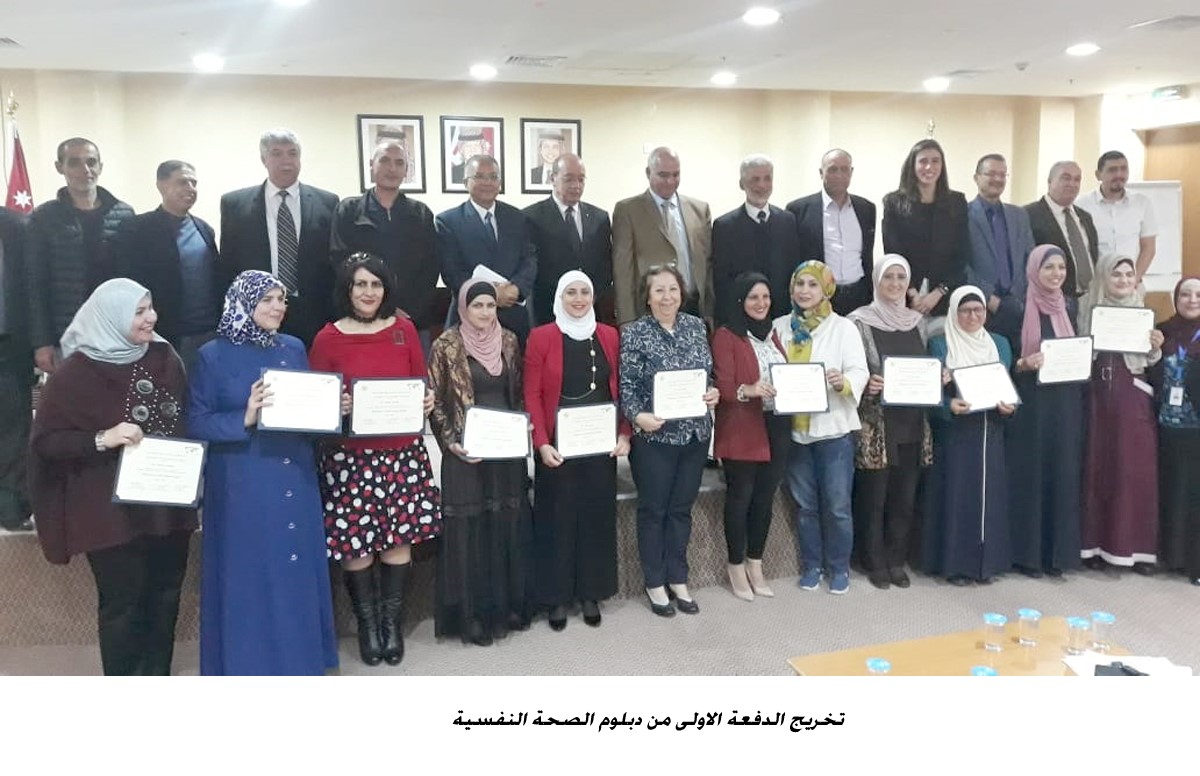
The GMHI developed a global mental health diploma designed to strengthen the capacity of primary care providers to recognize and respond to mental health needs. Developed in partnership with the Jordanian Ministry of Health, the program combined intensive in-person training with eight online modules covering mental health research, child and adolescent mental health, family-oriented care, depression, anxiety, grief and loss, trauma, resilience and mental health in Jordan.
Twenty-five primary care physicians from across Jordan participated in the program, with 13 successfully completing the certification requirements. Graduates were recognized at a 2019 ceremony hosted by the Jordanian Ministry of Health. The program was subsequently evaluated and provides a model that can be adapted for primary care providers working in settings with limited mental health resources and with displaced or underserved populations.
- Module 1: Case Studies in Primary Practice Research Relevant to Mental Health
- Instructor: Wael Al-Delaimy, UC San Diego
- Module 2: Depression in Adolescents
- Instructor: Benjamin Maxwell, UC San Diego
- Module 3: Assessing Depression in Primary Care
- Instructor: Jo Ellen Patterson, University of San Diego/Affiliate of UC San Diego
- Module 4: Assessing Anxiety in Primary Care
- Instructor: Jo Ellen Patterson, University of San Diego
- Module 5: Grief and Loss
- Instructor: Todd Edwards, University of San Diego/Affiliate of UC San Diego
- Module 6: Childhood Trauma and Anxiety
- Instructor: Suzan Song, George Washington University
- Module 7: Building Resilience - Helping Patients to Strengthen their Mental Health
- Instructor: James Griffith, George Washington University
- Module 8: Mental Health in Jordan
- Instructor: Hana Abu Hassan, Jordan University/ Affiliate of UC San Diego
Responsible Conduct of Research in Mental Health
As part of GMHI’s research ethics activities, Dr. Wael Al-Delaimy led an online workshop for research fellows from the Middle East and North Africa on the responsible conduct of mental health research. The workshop focused on ethical challenges related to conducting research with individuals experiencing mental illness, including vulnerability, stigma, informed consent and the application of international ethical standards in low-resource settings.
Research Projects
Mental Health and Psychosocial Support in Humanitarian Settings
Dr. Suzan Song’s current work focuses on capacity building for mental health providers working in humanitarian settings, localization of mental health and psychosocial support (MHPSS), and community care systems in Tigray, Ethiopia.
Public Mental Health Surveillance and Machine Learning
Dr. André Faro is leading multiple projects applying machine learning to public mental health research in Brazil and Argentina. Current work includes mapping psychological adjustment and mental health, developing tools for epidemiological surveillance of suicidal behaviors, and improving the identification and stratification of suicide-attempt risk.
Cultural Adaptation and Suicide Crisis Intervention
Dr. Alec Terrana is completing a mixed-methods study examining the cultural acceptability of a suicide crisis intervention for adolescents designed to divert patients from the emergency department. He is also beginning a needs assessment for an educational program aimed at improving psychiatry residents’ knowledge and attitudes when working with inpatients with borderline personality disorder admitted for suicidality.
Digital Mental Health and Human-Centered Design
Dr. Elizabeth Eikey is involved in several projects examining mental health and technology, including an app to support students with bipolar disorder, just-in-time adaptive interventions for emotional dysregulation, youth and parent perspectives on school surveillance technologies, art-based mental health support for Ukrainian refugee women, and mental health needs within diet and fitness apps and communities.
Hope Modules
Dr. James Griffith continues his work on Hope Modules, brief psychotherapeutic interventions designed to counter demoralization associated with chronic and uncontrollable daily life stressors.
Digital Mental Health Intervention for Burnout
Rawan Iriqat, mentored by Dr. Wael Al-Delaimy and Dr. André Faro, is leading a pilot randomized controlled study comparing digital self-guided booklets with a virtual reality–based compassion-focused cognitive behavioral intervention for healthcare providers. The study focuses on self-compassion and burnout, with the longer-term goal of adapting and scaling digital mental health interventions for low-resource and humanitarian settings.
Selected Publications
- El-Khodary B, Iriqat R, Abo-Shamla A, Ali M, Al-Delaimy W. (2026). Exposure to war-related trauma and symptoms of complex posttraumatic stress disorder among children and adolescents in Gaza. European Journal of Psychotraumatology, 17.
- Iriqat R, Herranen-Tabibi A, Sendar Z, Abu-Jlambo A, Al-Delaimy W. (2026). The overlapping effects of climate change and conflict on mental health of vulnerable populations: A scoping review. Conflict and Health, 20.
- Faro A, Macena M, Almeida L, Eaton WW. (2026). Screening for anxiety symptoms using the Center for Epidemiologic Studies Anxiety Scale (CESA) in a household sample in Brazil. Psychology, Health & Medicine, 1–16.
- Faro A, Tejada J, Al-Delaimy W. (2025). Severity classification of anxiety and depression using Generalized Anxiety Disorder Scale and Patient Health Questionnaire: National cross-sectional study applying classification and regression tree models. JMIR Public Health and Surveillance, 11, e72591.
- Ali DA, Hamoda HM. (2025). Clinical considerations around the development of Arab boys and mental health outcomes. Child and Adolescent Psychiatric Clinics of North America, 34(4), 579–592.
- Terrana A, Bruno W, Ibrahim N, Kaiser BN, Wei J. (2024). The Somali Distress and Resilience Scale: Development of a novel measure for Somali adults. Transcultural Psychiatry, 61(6), 805–821.
- Albanna A, Soubra K, Alhashmi D, Alloub Z, AlOlama F, Hammerness P, et al., Hamoda H. (2023). Effectiveness of collaborative tele-mental health care for children with attention deficit hyperactivity disorder in United Arab Emirates. Eastern Mediterranean Health Journal, 29(9), 742–748.
- Arafat SMY, Saleem T, Edwards T, Ali S, Khan M. (2022). Suicide prevention in Bangladesh: The role of family. Brain and Behavior.
- Hamoda HM, Hoover S, Bostic J, Rahman A, Saaed K. (2022). Development of a World Health Organization mental health in schools programme in the Eastern Mediterranean Region. Eastern Mediterranean Health Journal, 28(3), 225–232.
- Song SJ. (2021). Mental health of unaccompanied children: Effects of U.S. immigration policies. BJPsych Open, 7.
- Song SJ. (2021). Protecting the global mental health of forcibly displaced children from the COVID-19 pandemic. Pediatrics, 147, e2020025346.
- Patterson JE, Edwards TM, Vakili S, Abu-Hassan H, Wampler K, Rastogi M, Singh R. (2020). Family-based mental health services in low- and middle-income countries.
- Griffith JL. (2018). Hope Modules: Brief psychotherapeutic interventions to counter demoralization from daily stressors of chronic illness. Academic Psychiatry, 42(1), 135–145.
- Griffith JL, Kohrt B, Dyer A, Polatin P, Morse M, et al. (2016). Training psychiatrists for global mental health: Cultural psychiatry, collaborative inquiry, and ethics of alterity. Academic Psychiatry, 40, 701–706.
Conferences
Mental Health Primary Care Workshop and Conference, Jordan – 2016
In April 2016, GMHI partnered with Jordan University of Science and Technology (JUST) to organize a two-day conference at King Abdullah Teaching Hospital in Irbid, Jordan. The meeting brought together representatives from JUST, the Jordanian Ministry of Health, WHO, UNRWA, International Medical Corps and GMHI to discuss gaps in mental health services and the role of primary care in addressing them.
More than 100 students and residents attended sessions on global mental health, collaborative care, family involvement, resilience and mental health research in primary care. A major conclusion of the meeting was the need to expand mental health training for primary care providers and strengthen regional capacity in global mental health.
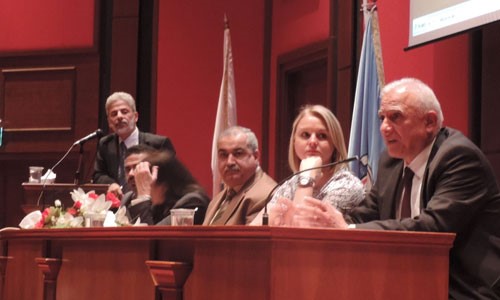
Panel at the 2016 GMH conference Including UNRWA, Jordan Ministry of Health, WHO and International Medical Corps representatives. The panel was moderated by Wael Al-Delaimy.
Jordan’s 2nd Global Mental Health Conference – 2017
Building on the 2016 meeting, GMHI partnered with the University of Jordan to organize the second Global Mental Health Conference in October 2017. The three-day conference brought together more than 300 participants and was held under the patronage of Her Royal Highness Princess Dina Mired.
The conference focused on strengthening community-based and primary care approaches to mental health, with sessions addressing resilience, family and collaborative care, school mental health, refugee and host populations, and research ethics. The meeting also included multidisciplinary discussion of proposed mental health legislation in Jordan and workshops on collaborative models of mental healthcare.
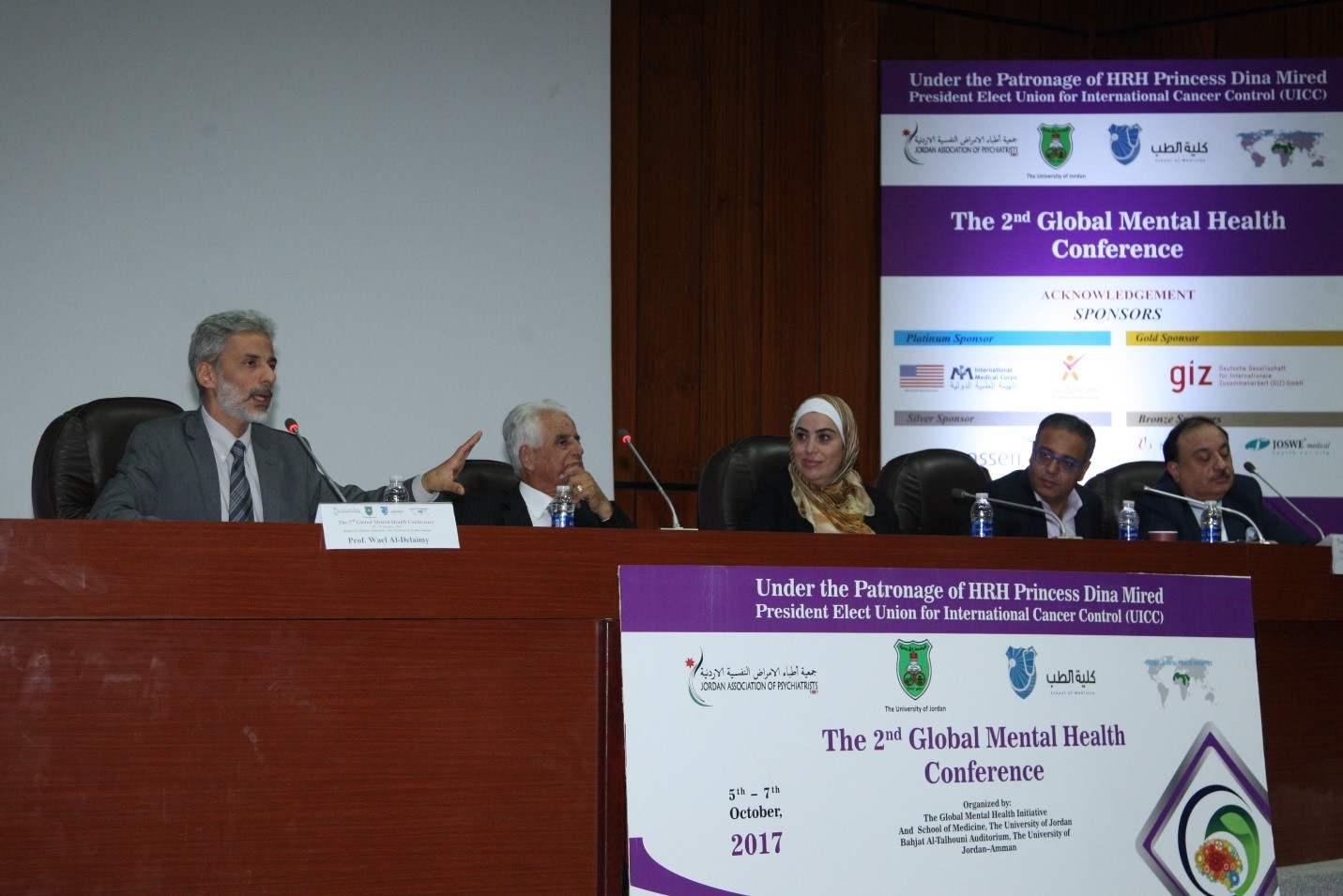
Dr. Al-Delaimy from GMHI leading a discussion about a proposed Mental Health Act, to his left is a Jordanian Constitutional Judge, a member of the Jordanian Parliament, Professor of Political Sciences at the University of Jordan, and Chair of the Jordanian Psychiatric Association.
3rd Global Mental Health Symposium: Global Mental Health and Vulnerable Populations – 2018
Held at the UC San Diego School of Medicine in April 2018, the third GMHI symposium focused on innovative approaches to preventing and treating mental illness among vulnerable populations. Experts from UC San Diego, George Washington University, and the University of Jordan presented work on trauma and mental health in refugee settings, brief psychotherapeutic interventions, the Open Dialogue approach, child trauma research, and telepsychiatry.
Together, these conferences and symposia helped build international collaborations, strengthen mental health capacity, and advance community- and primary care-based approaches to global mental health.
International Partners
A stable country in a troubled region, Jordan offers a unique opportunity for research and work in mental health, particularly with traumatized populations. Collaborating with multiple Jordanian organizations, we hope to study and develop mental health services in the Middle East. Partners include:
- Jordan University of Science and Technology (JUST) Family Medicine Program- medical school which aims to train students and improve the health of Jordan.
- Jordanian Ministry of Health Unit- seeks efficient, equitable and quality health care in the country of Jordan.
- World Health Organization (WHO) Amman Office- coordination of international health in United Nations system.
- United Nations Relief and Works Agency for Palestine Refugees (UNRWA)- providing safety and protection for Palestinian refugees.
- United Nations High Commissioner for Refugees (UNHCR) Amman Office- protecting rights and safety of refugees through advocacy, assistance and emergency response.
- International Medical Corps (IMC)- dedicated to relieving suffering of displaced populations through healthcare training and services worldwide.
- Taghyeer Organization - is an independent nonprofit organization founded in 2010 in Amman, Jordan, Taghyeer’s goal is to create a healthy, vibrant society by empowering people to think critically and lead the change they seek in their communities.
-
Group Of Studies in Psychology and Public Health (GEPPS): A research partner advancing international collaboration in public mental health, health psychology, mental health surveillance, and prevention research in Brazil and Latin America.
-
Sapien Labs: A global research partner providing opportunities to study population mental health and wellbeing using the Global Mind Project and its large-scale Brainbase dataset.
-
Islamic University of Gaza: An academic partner supporting locally grounded mental health research, training, and capacity building in Gaza.
-
Health Appeal Society: A regional nonprofit partner in Jordan supporting health promotion, mental health, research, training, and community-based capacity building in refugee camps.
Resources
- Centre for Global Mental Health: Offers news, seminars, and resources in response to the global health crisis.
-
Mental Health Innovation Network: Offers events, webinars, and other resources for global mental health.
-
Global Mental Health Movement: Information for global mental health movement.
-
WHO Mental Health Gap Action Programme (mhGAP): Aims at scaling up services for mental, neurological and substance use disorders for countries especially with low- and middle-income.
-
Other WHO links: